2026-09-10 · Tom Ellis
What Raymond Homeowners Need to Know About Pacific County Dumpster Permits
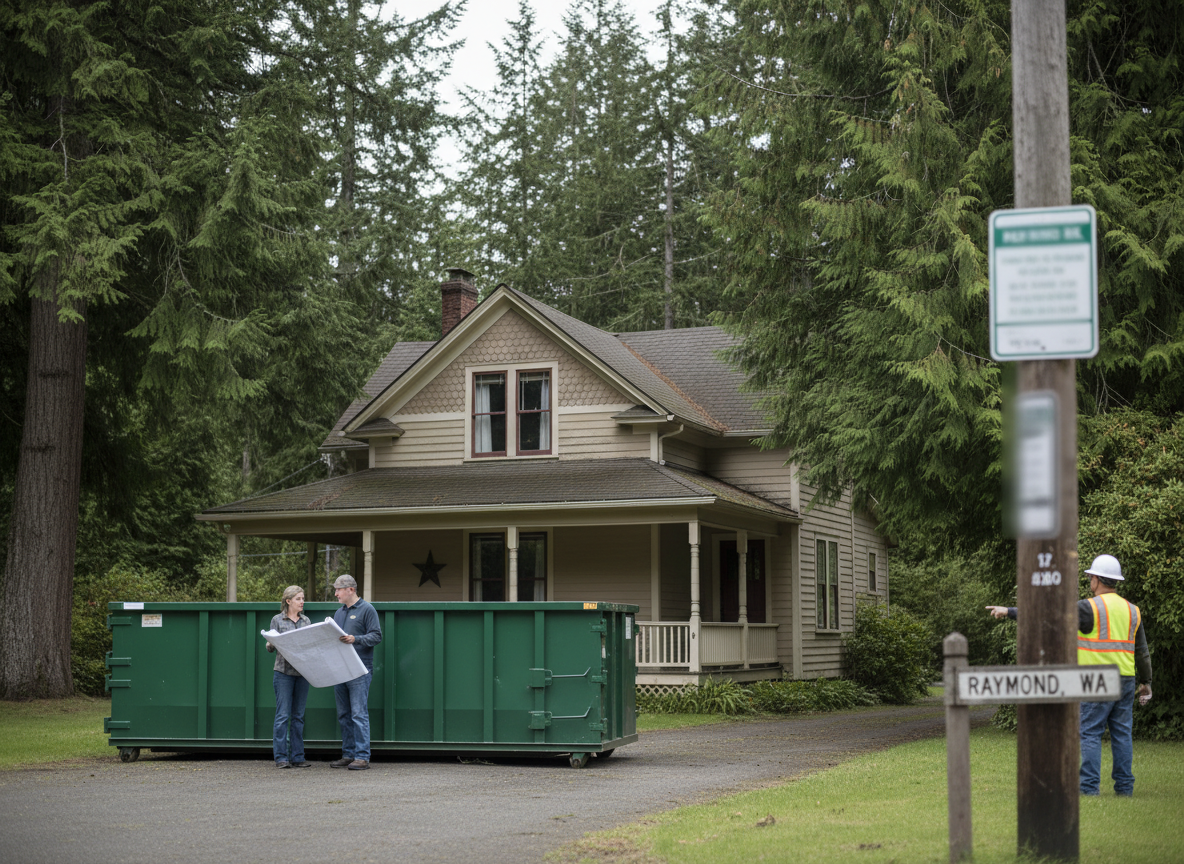
Pacific County requires permits for rolloff dumpster rentals placed on public streets or rights-of-way in Raymond, while private property placements often avoid this step unless near the Willapa River or in Downtown Raymond. Homeowners must confirm with county offices because heavy rainfall and mild temperatures can affect site access and waste stability during longer projects.
Checking Pacific County Rules Before Delivery
Pacific County maintains specific guidelines for temporary rolloff containers in residential zones around Raymond. Property owners typically contact the planning department to determine if a permit is needed based on container size, duration, and exact location. Heavy rainfall common to the region can turn driveways soft, so crews often recommend placing units on plywood or gravel pads to prevent sinking. This step matters most when the unit sits for more than a few days near older homes common in Downtown Raymond. Checking ahead prevents delays once the container arrives. Homeowners in areas close to the Willapa River may face extra review because of flood plain rules. Always request written confirmation from the county rather than relying on verbal answers.
How Heavy Rainfall Changes Permit Timing
Raymond's temperate climate brings frequent rain that can complicate dumpster placement and extend project timelines. Wet conditions often require extra documentation when applying for permits because saturated soil near the Willapa River increases the chance of runoff issues. Crews working in Pacific County frequently advise clients to schedule deliveries during drier windows when possible. This approach reduces the risk of the container becoming stuck or damaging lawns. The Handling Wet Yard Waste During Raymond's Rainy Months guide explains practical steps for managing moisture once the unit is on site. Permit applications submitted during peak rain months may take longer to process because county staff must verify drainage plans.
Placement Near the Willapa River and Local Landmarks
Dumpster placement close to the Willapa River or landmarks such as the Willapa Seaport Museum and Raymond City Park often triggers additional permit questions. Pacific County reviews these locations for environmental impact and access by collection trucks. Homeowners should measure the available space carefully because narrow streets in Downtown Raymond limit maneuvering room for larger containers. Soil conditions along the river tend to stay damp, so crews may need to use larger support boards under the unit. Linking to the Cost Guide for Rolloff Dumpster Rentals on Construction Jobs in Raymond helps residents understand how location factors into overall project planning. Early discussion with the county avoids last-minute relocation fees.
When Junk Removal Services Avoid Permit Needs
Many smaller junk removal jobs in Raymond can proceed without permits when the material is loaded directly into trucks rather than left in a stationary rolloff. Pacific County typically focuses permit requirements on containers that remain on site for multiple days. Residents clearing garages or yards near South Bend or Long Beach often choose this option to stay within private property rules. The Junk Removal page outlines how these services differ from rolloff rentals. This choice works well for quick cleanouts where weather exposure is a concern. Still, any material staged on public property requires checking local ordinances first.
Practical Next Steps for Raymond Homeowners
Start by calling Pacific County planning to describe your project location and expected duration. Provide details about proximity to the Willapa River or Downtown Raymond streets so staff can advise accurately. Once you know the permit status, contact a local provider that offers 24/7 scheduling to match delivery with your timeline. Inspect the drop spot for level ground and drainage before the unit arrives. This preparation keeps the process smooth even during rainy periods typical of the area.